LEARNING CENTER
The Joy of Journaling
Discover how journaling can inspire creativity, preserve memories, and bring more joy to everyday life.
Make Room for Your Thoughts, Memories, and Ideas
Have you ever wished you could slow down long enough to collect your thoughts? Perhaps you have a memory you don't want to lose, an idea you want to explore, or a dozen little things running through your mind at once. Maybe you simply want to remember more of your everyday life.
Journaling can help you make room for all of those things.
You don't need beautiful handwriting, expensive notebooks, or a talent for writing. You don't even need to write complete sentences. A journal can be a private place to think, a record of your days, a home for your ideas, or a practical tool for organizing your life.
Best of all, there is no single right way to do it. Your journal can be whatever you need it to be.
Journaling Is More Than Keeping a Diary
When we hear the word journal, we may picture someone sitting at a desk every evening, carefully recording everything that happened that day. That is certainly one way to journal, but it is only one possibility.
A journal can hold memories, questions, observations, plans, sketches, lists, dreams, recipes, or bits of conversation. It can be a place to celebrate a small victory or work through a problem. It can even be a collection of things you might otherwise forget.
Think about the different parts of your life that interest you. You might enjoy gardening, cooking, traveling, reading, raising children, making things, or learning about the world. Any of these interests could inspire a journal.
A gardener might record when seeds were planted and which varieties grew best. Someone who loves cooking might keep notes about family recipes and experiments in the kitchen. A traveler might collect interesting places, funny incidents, and memories of people met along the way.
You could also keep a journal simply because you enjoy having a place for your thoughts.
There is no test to pass and no particular style to master. If putting something on paper is useful or enjoyable to you, it belongs in your journal.
Why Put Thoughts on Paper?
Our minds carry a remarkable amount of information. We remember appointments, conversations, worries, plans, shopping lists, and ideas that arrive at inconvenient times. Sometimes it helps to move some of those thoughts out of our heads and onto a page.
Writing things down can make it easier to examine an idea, notice a pattern, or decide what deserves our attention. Looking back through old entries may reveal how a situation changed, how a skill improved, or how an ordinary day became a treasured memory.
Journaling can also help us pay attention. When you write about something that happened during the day, you may notice details you would otherwise have overlooked: the first birds singing in spring, a child's unexpected observation, the smell of bread baking, or a conversation that made you smile.
Some people enjoy writing about what went well during the day. Others prefer recording questions, challenges, or things they want to understand better. Still others use journaling to explore creative ideas without worrying about whether those ideas will ever become anything more.
Journaling is not a cure for every difficulty, and it doesn't have to produce a grand revelation. Sometimes its value is much simpler: you have taken a few minutes to notice your life and give your thoughts a little space.
Find the Kind of Journaling That Suits You
If traditional diary writing doesn't appeal to you, don't give up on journaling. Try a different approach.
A memory journal preserves moments you want to remember. Record a family story, a favorite holiday, a funny mishap, or something a friend said. You don't have to document every day. A few details may be enough to bring a memory back years later.
A gratitude journal gives you a place to record things you appreciate. They needn't be extraordinary. A comfortable chair, a good meal, a helpful neighbor, or a quiet morning can be worth noticing. If gratitude lists feel forced on a particular day, choose another kind of entry.
A nature journal records observations of the world around you. Note the weather, seasonal changes, birds at the feeder, flowers in bloom, or the progress of a garden. Sketches and simple lists work just as well as paragraphs.
A creative journal is a home for ideas. Collect possible projects, story beginnings, interesting words, questions, doodles, and things you'd like to try someday. The point is to give ideas somewhere to land before they disappear.
A planning journal helps you manage everyday life. You might record appointments, chores, meals, goals, or the steps needed to complete a project. This kind of journaling can be especially useful when you want to see your responsibilities in one place.
A personal reflection journal gives you room to think about experiences, decisions, and changes in your life. You might write about what you learned, what surprised you, or what you would like to do differently next time.
You can combine all these approaches, too. Your journal doesn't need a permanent label. It only needs to work for you.
Getting Started Without Making It a Chore
One reason people abandon new habits is that they make them too complicated. They buy supplies, establish ambitious schedules, and imagine the perfect routine before they have even begun.
Journaling can be much simpler.
Start with whatever paper you have available. A notebook, a loose sheet of paper, or a printed journal page will do. Choose a pen or pencil you enjoy using, find a comfortable spot, and begin with one small entry.
You might write for five minutes, or you might jot down three lines. You could make an entry every morning, once a week, or whenever something occurs to you. You don't have to catch up on missed days, and you don't owe your journal an explanation for your absence.
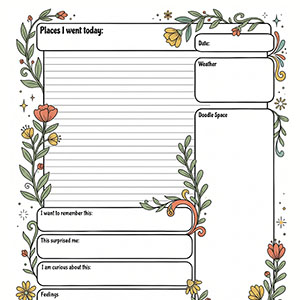
If a blank page feels intimidating, a guided journal or planner page may help. A few headings or prompts give you somewhere to begin without requiring you to invent the entire structure yourself. Here is one you can try: Retro Floral Journal
A printable page can be particularly useful if you like having a fresh start each time you write. You can keep completed pages in a folder, place them in a binder, or use only the pages that suit your current needs.
The important thing is to make journaling easy enough that you can return to it without feeling guilty or overwhelmed.
What Should You Write About?
Eventually, most journal keepers encounter the same problem: they sit down with good intentions and cannot think of a single thing to write.
A prompt can help. A prompt is simply a question or suggestion that gives your thoughts a starting point.
Try one of these:
-
What was the best part of my day?
-
What surprised me recently?
-
What would I like to remember about this week?
-
What is something new I learned?
-
What small thing would make tomorrow easier?
-
What am I curious about right now?
-
What is one thing I would like to try?
-
What made me laugh?
-
What am I looking forward to?
-
What would I tell a friend who was facing the same challenge?
You can also begin with a simple observation: what you are doing, what you see outside the window, or what has been occupying your thoughts.
Lists are perfectly acceptable journal entries. Write down books you want to read, meals you'd like to cook, places you hope to visit, or projects you'd enjoy attempting. Draw a picture if words aren't coming easily.
And remember, you do not have to answer a prompt just because someone suggested it. Skip any question that doesn't interest you. This is your journal, not a homework assignment.
Journaling Through the Seasons of Life
Our needs change over time, and our journals can change with them.
A busy parent might use a journal to record funny things the children say, keep track of family activities, or preserve memories that would otherwise blur together. Someone learning a new skill might record progress, questions, and lessons learned. A person starting a garden might keep planting dates and notes about what worked.
During a period of change, a journal might provide a place to sort through possibilities. During a quieter season, it might become a collection of observations, recipes, memories, or creative experiments.
You might even find that your journal changes from one month to the next. In spring, you may be interested in garden notes and outdoor projects. During the holidays, you might use it for planning, family memories, and favorite recipes. At other times, a simple daily page may be all you need.
There is no requirement to maintain the same journaling practice forever. Let it grow and change as you do.
Make Your Journal Your Own
Some people love a neat page with carefully written entries. Others fill their notebooks with arrows, scraps of paper, drawings, and lists. Both approaches are valid.
If you enjoy decorating, add colors, stickers, pressed leaves, or photographs. If you prefer simplicity, use plain paper and a dependable pen. If you like structure, choose pages with headings and spaces to fill in. If you prefer freedom, use a blank notebook.
You can keep your journal private, share selected entries with family, or turn some of your observations into letters, stories, recipes, or creative projects. You decide what stays on the page and what you do with it.
One practical consideration is storage. If your journal contains personal information, choose a place where you feel comfortable keeping it. Loose printable pages can be placed in a folder or binder, while a bound notebook keeps entries together. For planning pages that you no longer need, you can keep the important ones and recycle the rest.
You don't have to create a perfect archive of your life. The purpose is to make journaling useful and enjoyable now.
A Little Help Getting Started
If you would like to try journaling but prefer having a page ready to use, Cheap Peeks has free printable pages that can give you a starting point.
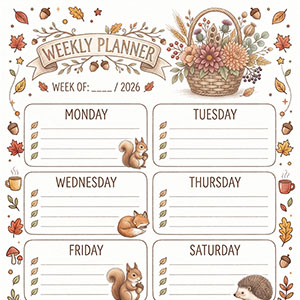
A daily planner page can help you organize tasks and leave room for observations. A seasonal page can give you a place to collect plans and memories. You can use a structured page exactly as designed, or ignore the headings that don't suit you.
Explore these related resources:
-
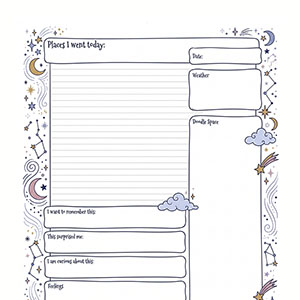 Daily Journal Page — for organizing a day and recording what matters.
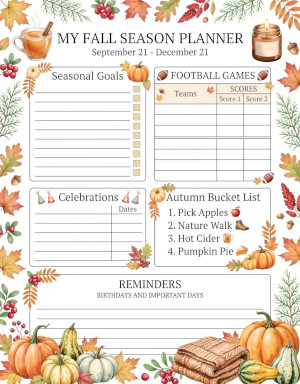 Autumn Season Planner Page — for collecting seasonal plans, ideas, and reminders.
-
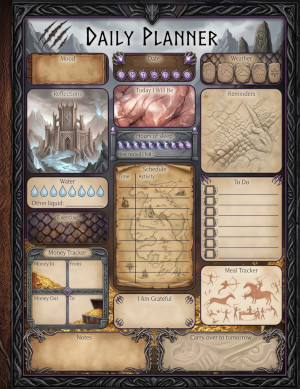 Epic Dragon Daily Planner — for a more playful approach to daily planning.
-
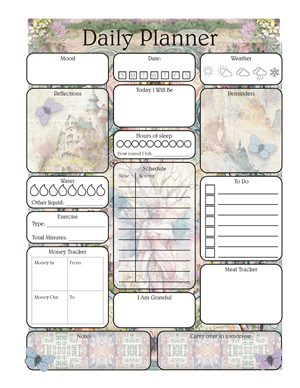 Fairytale Daily Planner Page — for another themed option to make planning more enjoyable.
These pages are starting points, not rules. You can print one, try it for a day, and decide whether it suits you. If it doesn't, try another style or use an ordinary sheet of paper instead.
The best journal page is the one that helps you do what you came to do.
Take Your Journaling Outdoors
Journaling doesn't have to happen at a desk. Some of the most memorable entries begin outside, when you notice an unfamiliar bird, discover an interesting plant, or find yourself enjoying a quiet moment in nature.
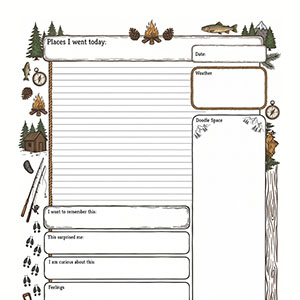
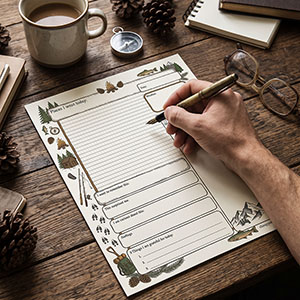
A nature journal gives you a place to capture those encounters in your own way. You might draw a map of where you went, illustrate something that caught your eye, answer questions about what you want to remember, or simply record the details that made the experience special. You don't have to be an accomplished artist. The point is to pay attention and preserve a little piece of the experience.
I wrote and illustrated a guided Nature Journal with spaces for drawing, writing, mapping, and reflecting, along with my own ink sketches of animals. It's designed to help turn time spent outdoors into memories you can revisit.
If that sounds like something you'd enjoy, Explore my Nature Journal on Amazon
Keep Exploring
You don't need to begin with a grand plan. Write down one memory, answer one question, or make a short list of things you want to remember. If you enjoy the experience, return to it when you feel like it.
Over time, you may discover that your journal has become a record of small accomplishments, changing interests, ordinary pleasures, and ideas you might otherwise have forgotten. Or perhaps you'll simply have a handy place to organize your thoughts and plans.
Either way, you've made a little room for yourself.
Choose a page, pick up a pen, and see what comes to mind. Your story doesn't have to be extraordinary to be worth recording.
There's always something worth peeking at.
Categories: