LEARNING CENTER
Staying Connected
Rediscover the joy, history, and emotional power of handwriting letters in a digital world.
The Lost Art of Hand-Written Correspondence: Reconnecting in a Digital World
As late autumn sets in and the end of the year approaches, a subtle shift occurs in our daily routines. Mailboxes, which spend most of the year filled with utility bills, unsolicited advertisements, and automated notices, suddenly begin to yield small treasures. Nestled between the circulars are colorful envelopes, textured cardstock, and handwritten addresses—annual holiday updates, family photo cards, and long-form letters from distant friends.
In an era dominated by instantaneous text messages, push notifications, and fleeting social media updates, the tradition of sitting down with pen and paper feels increasingly distinct. Physical correspondence carries a unique weight, a sense of tactile history, and an intentionality that digital communication struggles to replicate.
Understanding why handwritten letters hold such a special place in our culture requires looking back at how we got here, exploring the neurological benefits of putting pen to paper, and discovering how reviving this simple practice can enrich our daily lives and personal relationships today.
A Brief History of Human Connection Through the Mail
Long before global postal networks existed, letter writing was a formal, painstaking endeavor. For centuries, written communication was largely reserved for government dispatches, historical documentation, military orders, and the wealthy elite who had both the literacy and resources to send private couriers.
1. The Birth of the Penny Post
The landscape of human connection changed dramatically in 1840 with the introduction of the Uniform Penny Post in Great Britain, an innovation quickly adopted across North America and Europe. Prior to this reform, receiving a letter was prohibitively expensive, and the recipient—not the sender—was forced to pay for the delivery based on the distance traveled and the number of pages inside.
By introducing a standardized, pre-paid low fare (a single penny), letter writing was instantly democratized. For the first time in human history, working-class families, immigrants, long-distance lovers, and distant relatives could exchange news affordably, reliably, and frequently.
2. The Golden Age of Personal Ephemera
The late 19th and early 20th centuries marked what historians often call the golden age of personal ephemera. Writing paper became a canvas for personal expression. Stationers produced elaborate letterhead, decorative borders, embossed monograms, and custom sealing wax.
During this era, letters were not treated as disposable chatter. They were read aloud to entire households, passed around family circles, and carefully preserved in ribbon-tied bundles or wooden keepsake boxes. These archives ultimately became the primary historical records of everyday domestic life, preserving the vernacular, humor, and intimate struggles of ordinary people across generations.
3. The Origins of the Holiday Letter & Christmas Card
The holiday card tradition itself stems directly from this Victorian boom in correspondence. In 1843, Sir Henry Cole, a civil servant and innovator in London, found himself overwhelmed by his long list of unanswered personal letters as the holiday season approached. Wanting a polite yet efficient way to send greetings to dozens of friends and acquaintances at once, he commissioned artist John Callcott Horsley to design a festive, pre-printed card featuring a family gathering and a warm holiday greeting.
Cole printed 1,000 copies of the card and sold them for a shilling each. What began as an ingenious solution to a personal time-management dilemma quickly captured the public imagination. Within a few decades, printing technology advanced, chromolithography made vibrant artwork affordable, and the annual tradition of sending Christmas cards, winter greetings, and year-end family letters became a deeply rooted worldwide ritual.
The Psychology and Neurobiology of Writing by Hand
Why does receiving a physical letter feel so radically different from receiving a text message or an email, even if the underlying message is identical? The answer lies in how our brains process tactile creation versus digital consumption.
-
For the Sender: Encourages mindful focus, utilizes fine motor skills, and sets a natural, thoughtful pace.
-
For the Receiver: Provides a tangible artifact, elicits emotional warmth, and anchors sensory memory.
1. Motor Pathways and Thought Pacing
Typing on a mechanical keyboard or tapping glass screens is a process optimized for raw speed. It allows us to transcribe thoughts almost as fast as they occur, often leading to rapid, unfiltered, and conversational fragments.
Writing by hand, by contrast, is a physical craft. Forming cursive or print letters requires precise fine motor coordination and forces the brain to slow its rate of output to match the physical speed of the pen across the page. This deliberate slowing down engages the brain's reticular activating system (RAS), filtering out external distractions and encouraging deeper reflection, nuanced vocabulary selection, and more coherent narrative construction. When you write by hand, you aren't just sending data; you are pacing your thoughts.
2. The Tangible Proof of Effort
In cognitive psychology, the concept of effort perception explains why handmade gifts and physical letters carry immense emotional value. When someone opens a handwritten envelope, they immediately perceive the non-recoverable resources the sender invested:
-
Time: The sender set aside uninterrupted minutes specifically for the recipient.
-
Focus: The sender sat down without a backspace key, choosing words carefully.
-
Materials: The sender selected paper, ink, and postage, physically carrying the letter to a mailbox.
Digital communication eliminates friction, making messages effortless to send—and consequently, effortless to dismiss. A physical letter represents tangible proof of intentional effort, creating a felt sense of presence and warmth that lingers long after the letter is read.
3. Sensory Memory and Object Permanence
A digital notification lives behind a smooth sheet of glass alongside work emails, news alerts, and calendar reminders. Once read, it disappears into a digital archive or gets pushed off the screen by newer alerts.
A physical letter possesses sensory qualities: the weight of the paper stock, the slight indentation left by the pen nib, the faint scent of the stationery, and the unique flourishes of a loved one's handwriting. These sensory details anchor memory. A letter can be pinned to a refrigerator, tucked into the corner of a desk mirror, or stored in a drawer, serving as a quiet, physical monument to a human relationship.
Why Holiday Letters Matter Now More Than Ever
While handwritten notes are valuable year-round, late autumn and the winter holiday season provide a natural, built-in cultural window to restart or deepen the practice.
Bridging the Social Media Gap
Social media allows us to broadcast major life updates—promotions, vacations, home renovations, and family milestones—to hundreds of acquaintances simultaneously. However, curated public broadcasts often lack intimacy. They are designed for high-level consumption rather than personal connection.
A end-of-year holiday letter or handwritten card note allows you to step away from the public stage and speak directly to individual people. It gives you the space to share not just the highlight reel, but the quiet lessons, funny everyday moments, and personal gratitude that don't belong in a public status update.
Cultivating Year-End Gratitude
The process of drafting annual updates or writing personal greetings forces us to pause and reflect on the preceding twelve months. In the rush of daily life, weeks and months often blur together. Taking an evening in late November or December to review the year, list the people who supported you, and express appreciation serves as a powerful grounding exercise for mental clarity and emotional well-being.
5 Practical Steps to Revive Your Letter-Writing Habit
Re-engaging with handwritten correspondence doesn't mean you need to spend hours at a desk every day or completely abandon digital communication. A few small, intentional adjustments can make the practice smooth, enjoyable, and sustainable.
-
Build a Dedicated Correspondence Station: Friction is the biggest obstacle to any habit. Keep paper, envelopes, pens, & stamps together so there's zero prep time needed to write.
-
Master the "Micro-Note": Short postcards, small cards, or thank-you notes take less than five minutes but carry great meaning.
-
Practice Fixed Rituals: Dedicate 20 minutes on a Sunday afternoon, or turn writing into a cozy seasonal routine with a warm cup of tea or cocoa.
-
Track Address/Mail Records: Use a tracker to keep details like addresses, sent dates, and incoming cards organized in one place.
-
No-Stress Goals: Start with just 2 or 3 holiday letters this season.
1. Build a Dedicated Correspondence Station
Friction is the biggest obstacle to any habit. If finding a sheet of paper, locating a working pen, searching for an envelope, and hunting down a stamp requires digging through three different drawers, you are far less likely to follow through.
Create a compact "writing station" in a small basket, decorative box, or drawer near your favorite seating area. Equip it with:
-
Quality lined and unlined stationery sheets.
-
Matching envelopes.
-
A few reliable, smooth-writing pens (such as gel pens or fountain pens).
-
A book of postage stamps.
-
A dedicated mail-tracking sheet or address booklet.
When all materials are unified in one place, writing a note becomes an inviting 5-minute activity rather than a project.
2. Master the "Micro-Note"
Many people avoid writing letters because they feel pressured to produce multiple pages of brilliant prose. Dismantle this expectation by mastering the micro-note.
A meaningful postcard, small fold-over card, or short note only needs three core components:
-
The Anchor: Acknowledge a specific memory or connection ("I was thinking about our trip to the pumpkin patch last fall...").
-
The Update: Share one brief, personal life snippet ("We recently started growing microgreens on the kitchen counter...").
-
The Warm Close: Express direct appreciation ("Wishing you a peaceful holiday season and a wonderful New Year!").
A note containing just three thoughtful sentences can carry more emotional impact than a long, generic printed newsletter.
3. Integrate Card Writing into Seasonal Rituals
Instead of treating holiday card preparation as a frantic item on a Christmas weekend to-do list, pair it with a cozy seasonal ritual. Turn on a favorite album or podcast, steep a warm cup of tea or cocoa, light a candle, and set a timer for 20 minutes on a quiet evening. Committing to writing just two or three cards per session keeps the task pleasurable, intentional, and stress-free.
4. Use a Mail Tracker to Stay Organized
Keeping track of addresses, holiday card lists, and incoming notes can quickly become overwhelming if scattered across scratch pads or phone notes. Maintaining a simple, structured Mail Tracker allows you to note:
-
Recipient names and current mailing addresses.
-
Dates letters or holiday cards were sent.
-
Incoming letters or cards received (making thank-you notes easy to send).
-
Notes on special dates like birthdays or anniversaries.
5. Start Small This Season
You don't need to send fifty cards your first year back. Select three to five people—a distant friend you've lost touch with, a mentor, an aunt, or a neighbor—and start there. The joy you bring to their mailbox (and the likely response you receive) will naturally build momentum for the habit.
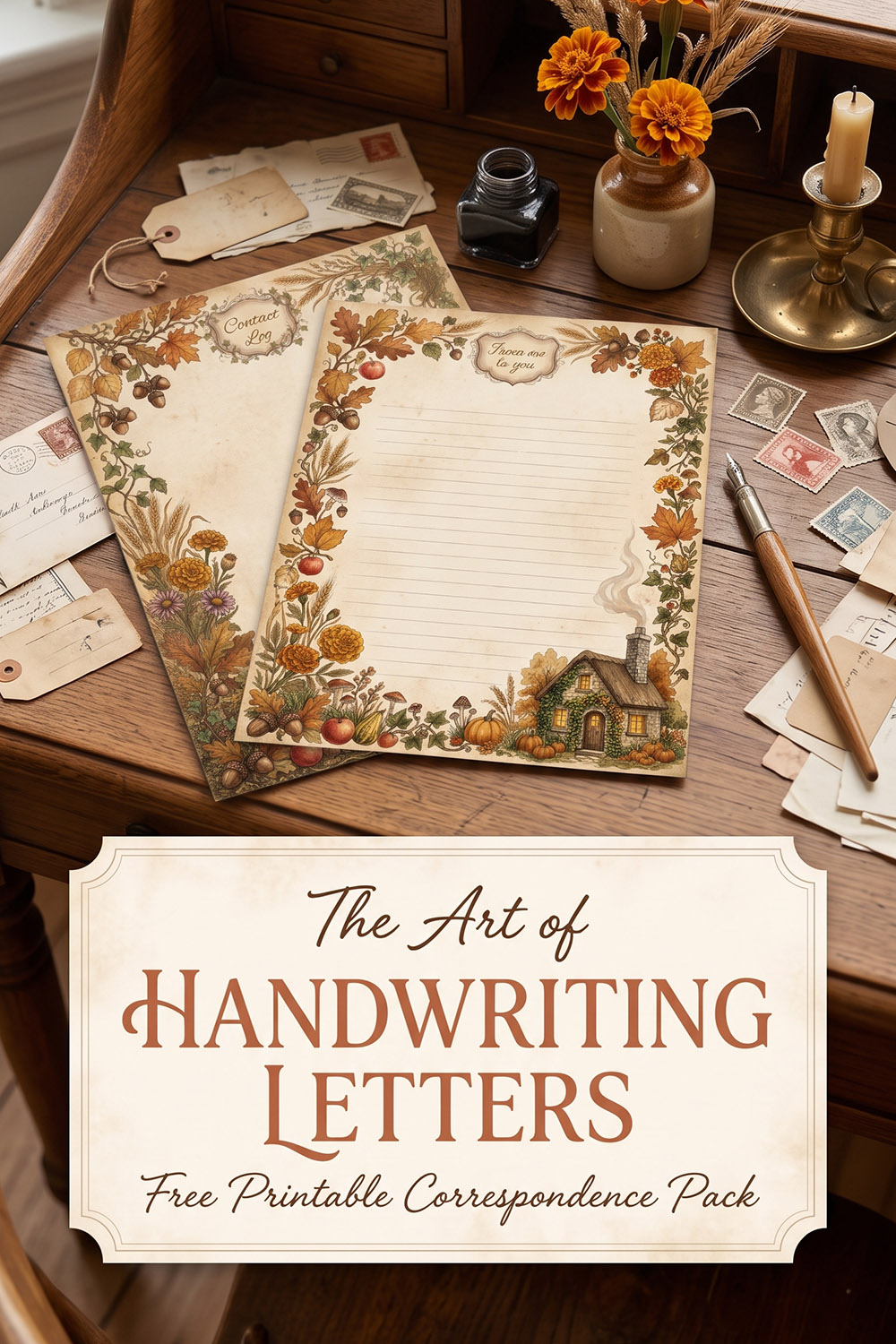
Free Printable Download: Vintage Correspondence & Mail Tracker Set
To help you organize your seasonal letter writing and make your correspondence beautiful, we've created a free printable pack right here on CheapPeeks!
What's Included in the Printable Pack:
-
Vintage Lined Stationery: Classic, printable writing paper featuring elegant border details designed for smooth writing and easy home printing on standard letter paper.
-
Printable Fold-Over Envelopes: Easy-to-cut-and-fold envelope templates matching the stationery style.
-
Seasonal Mail & Address Tracker Sheet: A clean, printable log sheet to track sent cards, incoming letters, address updates, and pen-pal notes all in one place.
Slip the tracker sheet directly into your daily binder or planner, print a batch of stationery, and take twenty minutes this week to send a handwritten note to someone who would love to hear from you.
Suggested Immediate Next Steps
-
Download and print your Vintage Correspondence & Mail Tracker Set from the CheapPeeks downloads library.
-
Select 3 family members or friends to surprise with a handwritten holiday note this month.
-
Gather your pens, stamps, and paper into a single cozy writing spot!
Keep Exploring
Categories: