LEARNING CENTER
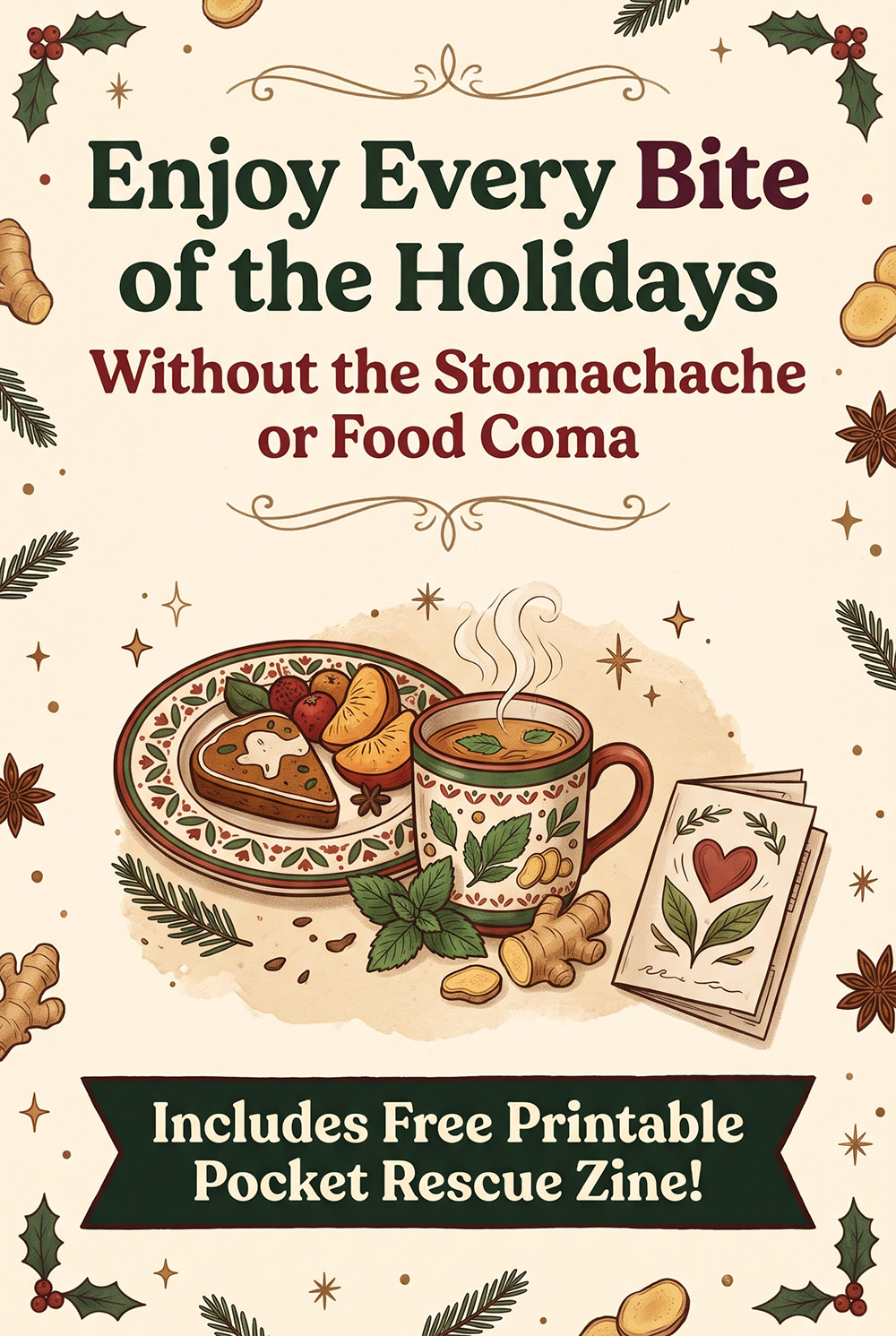
How to Enjoy Every Bite of the Holiday Season Without Making Yourself Sick
Practical, judgment-free strategies for pacing yourself at holiday feasts, navigating social grazing, and recovering gently so you feel great all season long.
How to Enjoy Every Bite of the Holiday Season Without Making Yourself Sick
From late November through New Year’s Day, the calendar turns into one long culinary obstacle course. Between Thanksgiving spreads, Hanukkah latkes, Christmas cookie swaps, Kwanzaa feasts, office potlucks, and New Year’s champagne toasts, you are surrounded by rich, heavy, celebratory foods for more than five weeks straight.
Nobody wants to spend the holidays counting almonds, measuring portions with a kitchen scale, or staring wistfully at a dessert table while nibbling on celery. Food is a centerpiece of human connection, memory, and celebration. At the same time, there is nothing festive about spending the drive home with burning acid reflux, lying awake at midnight with an uncomfortably distended stomach, or waking up the next morning feeling sluggish and unwell.
The sweet spot of holiday eating isn’t restriction—it’s pacing. By understanding a little bit about how your digestive system handles heavy meals and using a few practical strategies at the table, you can taste everything you love and still walk away feeling comfortable, energized, and glad you went.
1. Before the Party: Set Your Stomach Up for Success
Most holiday overeating actually begins hours before you ever see the buffet table. When you go into a gathering with an empty tank and a stressed digestive tract, your biology works against you.
Never "Save Up" Calories by Skipping Meals
It seems logical on paper: if you know you are going to eat a massive dinner at six o'clock, skipping breakfast and lunch should balance things out. In reality, arriving at a party starving triggers a steep drop in blood sugar and a surge in ghrelin, your body’s primary hunger hormone. When you finally smell warm rolls, roasted meats, and spiced desserts, your brain shifts into emergency survival mode. You eat twice as fast, chew half as much, and bypass your normal fullness cues until your stomach is physically painful.
Instead, eat a light, steady breakfast and lunch centered on protein and fiber—think scrambled eggs with greens, Greek yogurt with berries, or a bowl of lentil soup. You will arrive at the celebration with a calm appetite, allowing you to choose food based on what actually looks delicious rather than sheer desperation.
Hydrate Early in the Day
Mild dehydration frequently masquerades as hunger, and salty holiday appetizers combined with festive drinks will quickly dry you out. Drink plenty of water during the morning and afternoon leading up to the event. Waiting until you are already sitting at the table and chugging three glasses of water during dinner actually dilutes your stomach acid and takes up valuable physical room, leaving you feeling sloshed and bloated before you even reach dessert.
Dress for Honest Comfort
Skip the punishingly tight waistbands that cut off circulation the moment you sit down, as well as the ultra-stretchy lounge pants that offer zero feedback until you have eaten three plates of food. Aim for comfortable, well-fitting clothes that let you breathe and sit easily while still offering a gentle reminder when your midsection starts to expand.
2. At the Table: Smart Plate Architecture
Once the food is laid out, how you build your plate—and the order in which you eat it—makes a dramatic difference in how your stomach feels an hour later.
Take a Recon Lap First
Before you pick up a plate or a pair of tongs, walk the entire length of the buffet or scan the whole table. When you start loading your plate at the very beginning of the line, you inevitably pile up on early staples—like plain dinner rolls, chips, or heavy casseroles—only to reach the end and realize your grandmother’s famous brisket, fresh crab claws, or homemade tamales are sitting right there. Survey the whole spread first so you can save your stomach real estate for the dishes you genuinely care about.
Sequence Your Bites: Fiber, Protein, Then Starches
You don't have to skip the mashed potatoes, stuffing, or sweet treats—just change the order in which they hit your stomach.
- Start with vegetables and salad: Fiber forms a gentle mesh in your digestive tract that slows down how quickly food leaves your stomach.
- Move to protein and healthy fats: Turkey, roast beef, fish, beans, or nuts trigger the release of satiety hormones that tell your brain you are getting nourished.
- Finish with rich starches and sweets: When sugars and refined carbohydrates land on top of fiber and protein, they absorb much more slowly. You avoid the sudden blood-sugar spike and subsequent crash that leaves you drowsy on the couch.
Respect the 20-Minute Fullness Lag
Your stomach does not have an instant shutoff valve. It takes roughly 20 minutes from the time food hits your stomach for stretch receptors and gut hormones to send a clear "we have enough" signal up to your brain. If you eat a full plate in seven minutes flat and immediately go back for seconds, you have already overshot your comfort zone before your brain even gets the memo. Put your fork down between bites, join the conversation, and give yourself a 15-to-20-minute breather before deciding whether you truly want another helping.
Skip the "Everyday" Filler Foods
Every holiday spread includes foods you can easily get on any random Tuesday—store-bought crackers, plain white rolls, generic tortilla chips, or basic grocery-store cookies. Don't waste your limited stomach capacity on filler. Focus on the seasonal specialties, family recipes, and once-a-year treats that make the occasion special.
3. Navigating Social Pressure & Mindless Grazing
Overeating during the holidays isn't always about hunger; half the time, it’s social choreography.
Park Yourself Away from the Snack Table
Human beings are wired to graze when food is within arm's reach. If you stand next to the bowl of spiced nuts or the charcuterie board while chatting with relatives, your hand will automatically travel from the tray to your mouth every thirty seconds without your brain registering a single bite. Fill a small appetizer plate, walk into another room or across the patio, and sit down to enjoy it.
Keep a "Decoy" Drink in Hand
At cocktail parties and family mixers, having an empty hand makes you an immediate target for hosts offering another plate, another drink, or another round of hors d'oeuvres. Hold onto a tall glass of sparkling water with a splash of cranberry juice or a twist of lime. It keeps your hands busy, refreshes your palate, and naturally slows down your pace if you are also enjoying wine or cocktails. (A classic rule of thumb: alternate every alcoholic drink with one full glass of water.)
Use the "Leftover Mindset"
One of the biggest psychological triggers behind holiday overeating is artificial scarcity—the feeling that if you don't eat the pie, the stuffing, and the roast all right now, you won't get another chance until next year. Remind yourself that the food is not going extinct at midnight. Take smaller tastes of the main dishes, save room for a reasonable slice of dessert, and gratefully accept a leftover container to enjoy for lunch the next day when your stomach has reset.
Polite Scripts for Food Pushers
Every family has at least one loving relative who measures affection by how many times you refill your plate. You can decline seconds warmly without hurting anyone's feelings:
- "Everything is so good I want to make sure I actually have room left for your famous pie!"
- "I am completely, happily full right now—would you mind if I packed a little bit to take home for tomorrow?"
- "That was delicious, I’m going to take a quick breather and grab some water before I look at anything else."
4. After the Feast: Gentle Recovery
Even with the best intentions, rich sauces, heavy dairy, sugar, and bubbly drinks can occasionally leave your digestive tract working overtime. What you do
Keep Exploring
Categories: